Land is life. As the ongoing genocidal campaign to annihilate Palestinians – accelerated in 2023 – has made abundantly, heartbreakingly clear, the struggle over land is a struggle for life itself. This module grounds the understanding of Zionist settler colonialism in the pedagogy of land as life and for life. As Indigenous thought traditions have taught us, our relation to land shapes our critical consciousness (🍉 Salaita 2021). Land is a condition of possibility for world-building (🍉 Linda Quiquivix, minute 27). As students of Zionism as settler colonialism, we approach land from an ethic of stewardship and mutuality and toward a goal of teaching and learning against violent, colonizing, appropriating forces that frame land as extractable, ownable, and disposable.
![Four vertical rectangles show a map image of Palestine portraying the portion of land that is Palestinian. The left-most rectangle, stage 1, shows Palestine in 1946; it is mostly green (denoting Palestinian land) with a few small white spots (denoting Jewish land). The next box to the right, stage 2, shows the UN plan 1947, depicting Palestinian land (in green) greatly reduced to the regions around Gaza and the West Bank. The third rectangle, stage 3, depicts the period of 1949-1967; here, Palestinian land (in green) is even further reduced. The final rectangle, stage 4, depicts 2008, where Palestinian land is confined to Gaza and a carved-out West Bank, where the green appears almost as archipelagos, slightly disconnected from one another. ]](https://criticalzionismsyllabus.com/wp-content/uploads/2026/09/image-3.jpeg?w=1024)
By definition, settler colonialism destroys to replace. Through ethnic cleansing, genocide, and land theft, it encourages settler migration and settler replacement of Indigenous communities, institutions, and presence. Yet as Fayez Sayegh (1965) explains, Zionism also destroys to erase: enacting violent and racist territorial expansion by dispossessing Palestinians of their lands – as well as epistemically through place names, of their communities, and of their livelihoods, Zionism as settler colonialism seeks to make reconstruction of Palestinian lifeways impossible.
The concept of dispossession cuts to the core of how settler colonialism functions: It forcibly displaces Indigenous life – and here we include all forms of life, including native plants – in order to possess the land, initiating a relationship of extraction and domination. Demonstrated through the oft-repeated Zionist slogan describing Palestine as “A land without a people for a people without a land” (🍉Alan 1979), Zionism animates settler colonialism through the myth that the land is empty. The violent erasure featured in this founding myth operates both by asserting Palestinian land is available to be taken and occupied as well as the racist assertion that Palestinians themselves are a barbaric and/or primitive people, who do not know how to cultivate and steward their own land. In fact, quite the opposite is true, as the materials in this module invite us to see.
Settler colonialism depends on a gendered logic in its campaign of elimination. From Zionist militias’ brutal occupation of Palestinian villages in 1948 to the contemporary horrific settler violence against Palestinians in the West Bank, Zionism operates through a system of domination that positions femininity as weak, to be taken, conquested, dominated by force. It plays out both through conceptions of the land as feminine (to be conquested and/or patronizingly protected) and through sexual violence as a common weapon of conquest (Ghanayem 2019). The Zionist entity aims to control, extinguish, and prevent life through calculated reproductive genocide (🍉Palestinian Feminist Collective 2024) as a “deliberate strategy of settler colonial erasure” (🍉 Shoman 2025).
Critically engaging Patrick Wolfe’s insight that settler colonialism a “structure, not an event” (2006), this module also invites us to examine how settler colonialism manifests in less overtly physical ways. Through violent efforts to control and manipulate the very terms that name Israel’s intent to destroy Palestinians – from settler colonialism to genocide to apartheid and beyond – as well as through smear campaigns designed to malign those who name its violence, Zionism also aims to achieve material conquest through psychic intrusion (Sheehi 2024). Such efforts to stake settler outposts even on internal, psychic terrain also plays out in the media and digital realms. We also examine the pervasive efforts to repress and curtail speech that permeate the technology that we use every day – from shadowbanning popular Palestinian journalists’ accounts to censoring posts and accounts by manipulating the charge of antisemitism – as a form of “digital settler colonialism” (Zahzah 2024, 2025).
Arising at a historical moment in which overt forms of European settler colonialism had achieved a formidable level of normalcy that obscured their tracks, Zionism emerged as a violently graphic manifestation of settler colonialism. At the same time, it exemplifies the crucial role of colonialist deception – here, Israeli disavowal – to hide or obscure the violent projects of occupation and elimination (Waziyatawin 2012). When Zionist organizations wage lawfare to normalize the false claim that calling Israel settler colonialist is a form of antisemitism, they demonstrate how important it is to understand that Zionism itself is settler colonialism. As a contemporary crucible of violent dispossession, and as a testament to the fact that genocide is not an aberration but its logical, horrible goal, we must urgently and critically study the ways that Zionism is settler colonialism.
Zionists in Their Own Words:
“We must establish settlements. We need security forces. We need to settle this land because it’s our land.”
January 28, 2024, Israeli Communications Minister Shlomo Karhi
→ In an interview with Arutz Sheva, Israeli communications minister Shlomo Karhi called for the settlement of all Palestinian land by Israel. Karhi attended a conference in Jerusalem calling for the resettlement of the Gaza Strip, which was attended by thousands, including Itamar Ben Gvir, Bezalel Smotrich, and several other ministers from Prime Minister Benjamin Netanyahu’s Likud party. | See Instagram post
“Yes, we say we want to take their land, take their territory and settle in it because that’s the only way they’ll understand that we defeated them. They don’t care about the houses, they don’t care about the dead, they don’t care about anything except the land.”
February 10, 2024, Yinon Magal on The Patriots show on Channel 14
In an episode of The Patriots show on channel 14 posted on February 10th: See Twitter post
More to be added ! Not done…
Keywords:
- Settler Colonialism
- Dispossession
- Indigenous
- Conquest
- Terra Nullius
- Apartheid
- Racial Capitalism
- Robin D. G. Kelley, “What Did Cedric Robinson Mean by Racial Capitalism?,” Boston Review, June 12, 2017, https://bostonreview.net/articles/robin-d-g-kelley-introduction-race-capitalism-justice/ ; listen to this podcast with Robin D.G. Kelley about racial capitalism (49 min.)
Discussion Questions:
Centering Palestinian land, the artifacts offered for consideration highlight the violence of dispossession characteristic of settler colonialism. Inherent to the idea of dispossession is a conception of land as property, that is, as something that can be owned, occupied, and manipulated (e.g., extracted for profit/gain).
One major, concrete tactic of dispossession in Palestine is exercising control over the land through violent occupation, ecocide, …
We offer (2-3) key artifacts for exploration, which offer concrete, multifaceted examples of the way that settler colonialism manifests. Consider them [objects] for anchoring a set of key, animating discussion questions in response to the provocation “Zionism is settler colonialism”:
Discussion Question: What, to settler colonialism, is land?
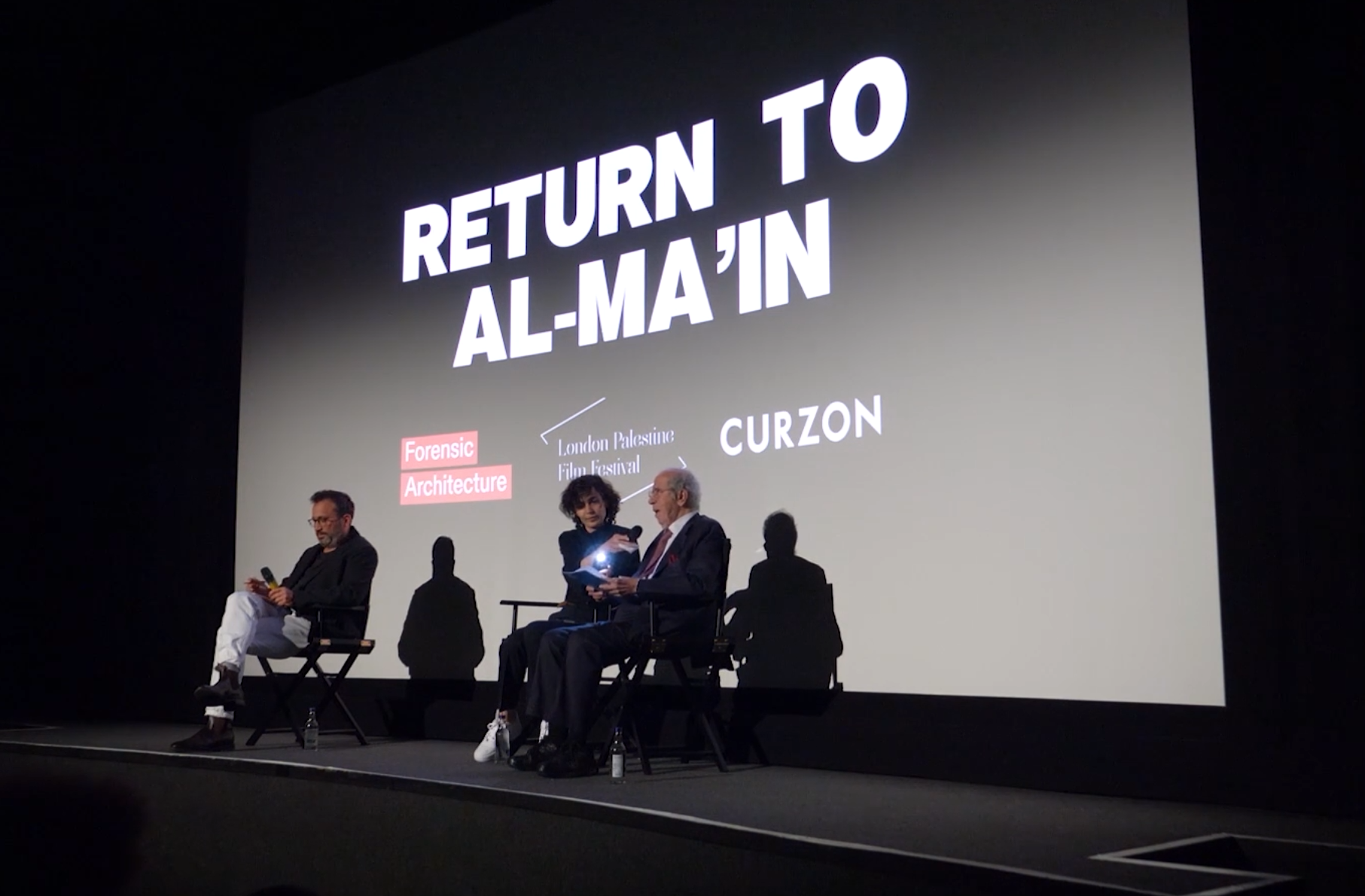
Artifact: “Return to Ma’in,” Salman Abu Sitta, Mapping My Return – a forensic investigation of the attack and occupation of the Palestinian village al-Ma-in on May 15, 1948 by the Zionist paramilitary militia known as the Haganah. The Haganah carried out such attacks across the western Naqab desert, expelling the inhabitants of multiple Palestinian villages.
Discussion Question: How does settler colonialism view the land? What is it for?
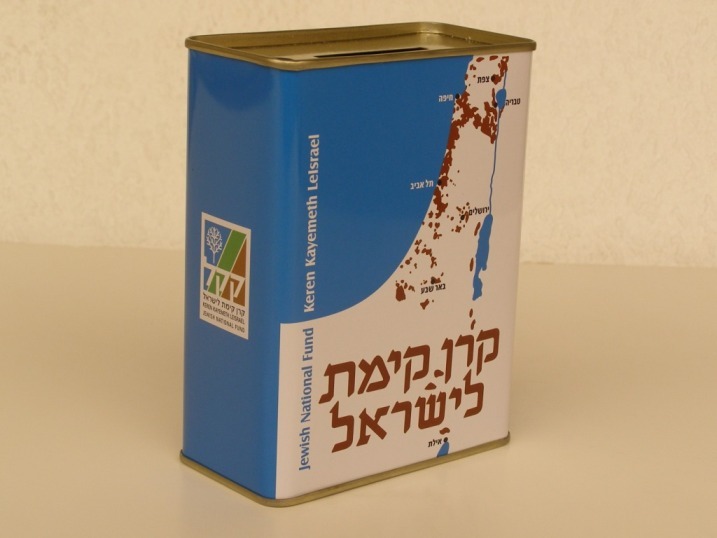
Artifact: Jewish National Fund charity box – Indeed, as Melissa Weiner shows, the “value” of the Blue Box, according to its framing by the JNF in “Our Bond with Israel,” was that by introducing “the JNF into the Jewish home in its everyday life and across generations…[i]t performs constant and perpetual propaganda work for the JNF wordlessly.”
Discussion Question: How does the land resist settler colonialism?
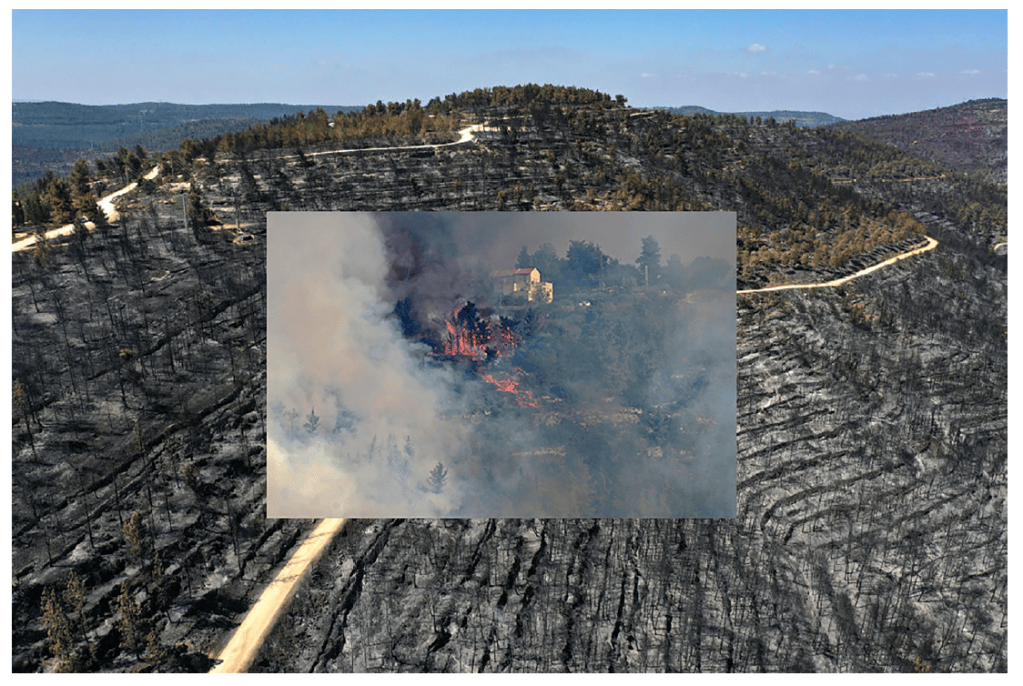
Explore some forms of resistance to land theft and to other forms of dispossession
Image credit: p. 99 of Sherena Razek (2024) “Fire as Elemental Intifada in Colonized Palestine,” Journal of Palestine Studies, 53:3, 94-107, DOI: 10.1080/0377919X.2024.2422287
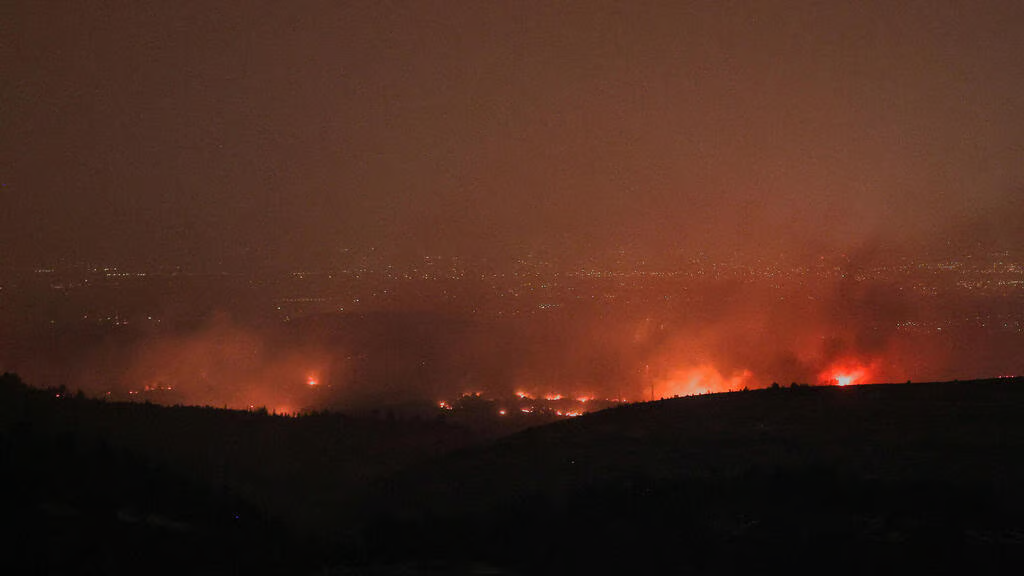
Artifact: Fire – Wildfires in Southwestern hills of Jerusalem, 2021 – When wildfires erupted in the Southwestern hills of Jerusalem in 2021, they destroyed up to 20,000 dunums of pine forest that had been planted by the JNF, revealing the terraced hillsides that had been concealed by the monocultural forest of trees. Sherena Razack (2024, abstract and link below) posits fire as an elemental force of Indigenous Palestinian resistance to the ongoing Nakba, and its displacements of both people and land. Consult Razack’s visual essay to explore her claim that fire is an elemental force of resistance. What other forms of resistance can you identify?
Discussion Question: What does it mean to have sovereignty? How does the concept of sovereignty relate to land?
Discussion Question: Lorem ipsum (placeholder)
Annotated Study Materials
Visuals
- Forensic Architecture
- Visualizing Palestine
- An Ongoing Displacement graphic
Videos
- Al Jazeera – Palestine 1920 film
- Al Jazeera – How a Zionist Armed Group Helped Create the State of Israel
- Film: John Halaka, The Presence of Absence in the Ruins of Kafr Bir’im (approx 1 hour)
Readings
- Fayez A. Sayegh. Zionist Colonialism in Palestine. Beirut: PLO Research Center, 1965.
- Originally published by the Palestine Research Center (whose archives were subsequently looted and bombed by the Israeli invasion of Lebanon in 1982) and also reprinted in the Settler Colonialism Studies journal in 2012, Sayegh’s Zionist Colonialism in Palestine is a concise explanation of Zionism as a racist and settler colonialist project. It rejects the idea of a noble, democratic, or benign liberal Zionism, demonstrating it to have always been an overtly racist and violent project of elimination seeking to occupy Palestine through forced expulsion and violent dispossession of Palestinians from their land. He argues that the Zionist settler colonialist entity is defined by three key characteristics: racism, violence and terrorism, and territorial expansionism. See also “The Cause of Anti-colonialism and Liberation is One: Fayez Sayegh’s Zionist Colonialism in Palestine,” by Louis Allday (March 23, 2021 for Liberated Texts), which offers helpful context and background.
- Nahla Abdo and Nira Yuval-Davis. 1995. “Palestine, Israel and the Zionist Settler Project.” Pp. 291-322 in Unsettling Settler Societies: Articulations of Gender, Race, Ethnicity and Class, Daiva Stansiulis and Nira Yuval-Davis (eds). Sage Publications.
- The article situates the Zionist settlement project within the overall framework of dispossession, examining the nature and character of Zionism as it evolved from a minority political movement into a powerful state. It looks at three central goals of the ZIonist settler movement – the conquest of the land, the conquest of labor, and the conquest of the market – in dispossessing Palestinians. Through feminist analysis, it pays particular attention to the complex articulations and interrelationships of gender, class, and ethnicity in the Zionist settler project.

